

Precision Wire Form Manufacturing: A 2026 Guide
Table of Contents
- What Is Precision Wire Form Manufacturing
- Wire Forming Process and Equipment
- Wire Form Design: From Concept to Production
- Materials and Wire Types for Custom Wire Forms
- Dimensional Accuracy, Tolerances, and Quality Control
- Applications Across Manufacturing Industries
- How to Evaluate and Select a Wire Form Supplier
- Cost Drivers and Quoting Inputs for Wire Forms
- Frequently Asked Questions
Last Updated: October 11, 2026
What Is Precision Wire Form Manufacturing
Precision wire form manufacturing is the process of bending, coiling, and shaping wire into custom components with tight tolerances and consistent repeatability. It combines material science, mechanical engineering, and process control to deliver wire forms that meet exact specifications, sometimes down to fractions of a millimetre.
Precision wire form manufacturing emphasises dimensional accuracy, repeatability, and the ability to work with challenging materials. A wire form is a functional component designed to perform under specific loads, temperatures, and environmental conditions. The manufacturing process determines whether the part will function reliably or fail prematurely in the field.
Precision wire form manufacturing encompasses springs, wire assemblies, custom profiles, surgical instruments, catheter guides, and industrial applications. Each requires different tooling, material selection, and quality control approaches.
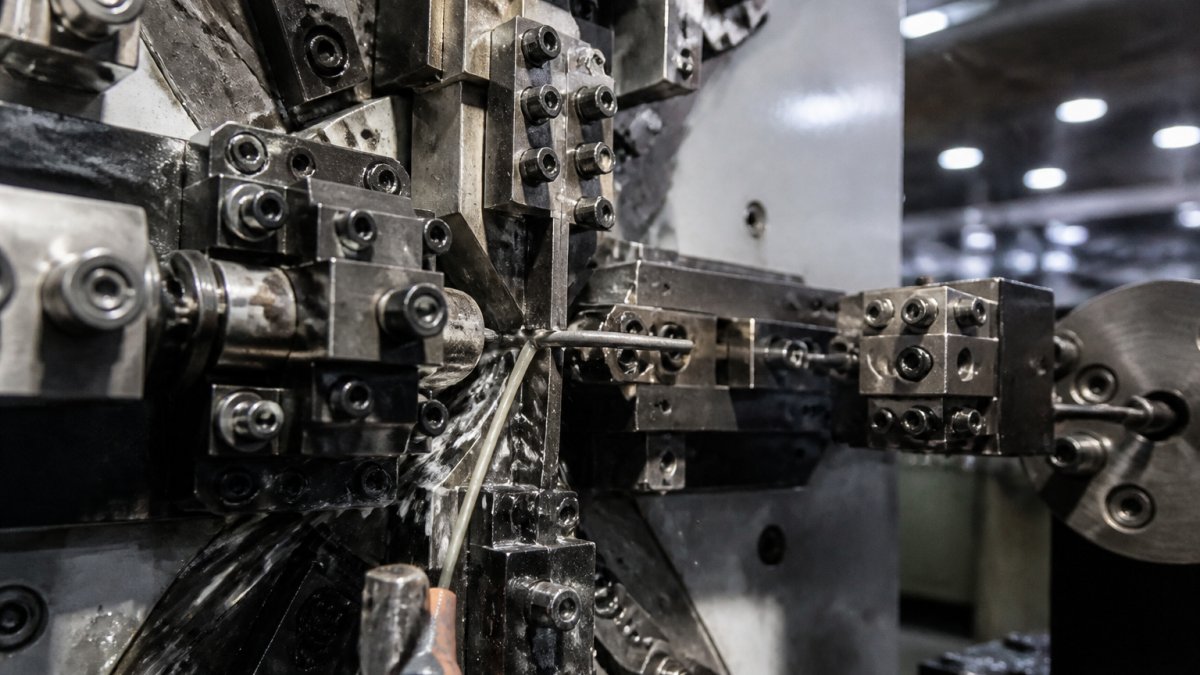
Wire Forming Process and Equipment
Wire forming begins with straightened wire fed into specialized machinery. Two primary methods exist: fourslide forming for high-volume repeatable forms, and CNC wire forming for lower volumes and intricate designs.
Fourslide forming uses rotating slides to progressively bend wire in multiple directions simultaneously. Mechanically driven and ideal for high-volume production, a single machine can produce hundreds of parts per hour.
CNC wire forming offers flexibility for lower volumes and intricate designs. Programmable systems adjust bend angles, radii, and sequences based on customer drawings, requiring less tooling investment than fourslide machines. It's ideal for prototyping and small-batch production.
Both methods demand precision equipment calibrated to hold tolerances within micrometres, with continuous monitoring and automatic adjustments to prevent scrap. This process control separates precision wire forming from basic metal bending.
Wire must be straightened, cleaned, and inspected at multiple checkpoints. Secondary operations like welding, grinding, or coating may follow. The sequence and quality of these steps determine whether the component meets specification.
Wire Form Design: From Concept to Production
Designing a manufacturable wire form requires understanding functional requirements and forming process constraints. Many designs are impossible to produce or prohibitively expensive because engineers don't consult manufacturers during design.
Design-for-manufacturability is critical. A simple-looking design may require multiple operations and custom tooling, while a slight modification might use standard equipment with minimal tooling. Supplier input during design saves time and money.
Wire diameter, material type, and hardness directly affect achievable geometries. Hardened materials resist bending and require more powerful equipment; soft materials bend easily but may not hold shape under load. Material choice and design constraints are iterative.
Bend radii are critical: bending too tightly causes cracking and failure. Each material and diameter has a minimum bend radius. Specifying too-tight radii forces rejection or use of softer material that won't hold shape under load. Understanding these limits prevents costly revisions.
Complex multi-axis forms require careful bend sequencing to avoid interference. Wrong sequences cause wire binding or tooling interference. Experienced manufacturers know these sequences; inexperienced designers often don't, leading to revisions.
| Design Consideration | Impact on Manufacturing | Best Practice |
|---|---|---|
| Bend radius | Determines material hardness and risk of cracking | Consult supplier for minimum radius per material |
| Wire diameter | Affects achievable complexity and cost | Larger diameter = simpler forms, lower cost per unit |
| Material selection | Constrains bend tightness and final strength | Match material to functional requirements and forming limits |
| Dimensional tolerances | Drives inspection frequency and scrap rate | Specify only tolerances actually required for function |
| Secondary operations | Adds cost and lead time | Minimise welding, grinding, coating where possible |
Materials and Wire Types for Custom Wire Forms
The material you choose for a wire form determines its strength, corrosion resistance, temperature performance, and formability.
Carbon steel and music wire dominate high-volume applications. Music wire (EN10270-1) offers excellent strength and formability for repeated loading. Carbon steel is cost-effective for non-corrosive environments. Both are readily available and well-understood by manufacturers.
Stainless steel (EN10270-3 302) is essential where corrosion resistance matters: medical devices, food processing, and offshore applications. It's harder to form than carbon steel but the corrosion resistance justifies the cost.
Inconel, Phynox (Elgiloy), and other superalloys handle extreme temperatures and corrosive conditions stainless steel cannot tolerate. Significantly more expensive and difficult to form, they're reserved for jet engines, deep-sea equipment, and high-temperature processes.
Constant force springs, made from Type 301 stainless steel, exert nearly constant force regardless of extension length. Essential for counterbalance applications, cable retractors, and systems requiring consistent restraining force.

Garter springs (oil seal springs) maintain clamping force around rotating shafts in hydraulic pumps, washing machines, engine seals, and transmission systems.
Material selection affects cost, lead time, tooling, and minimum order quantity. Suppliers with access to multiple materials offer flexibility; those limited to standard materials force compromises.
Dimensional Accuracy, Tolerances, and Quality Control
Precision wire form manufacturing lives or dies by dimensional accuracy. A wire form that's 0.1mm out of spec might work fine in one application and fail catastrophically in another.
Tolerances define acceptable dimension ranges. Tighter tolerances cost more due to increased inspection and process control. Specifying tighter tolerances than necessary drives costs up without benefit.
SpringXpert's compression and extension springs conform to DIN 2095 (Grade 2) or BS 1726 Class B tolerances, the industry standard for stock springs. These tolerances are proven, achievable, and cost-effective. Custom wire forms can be tighter, but the cost escalates.

Quality assurance involves incoming material verification, in-process checks, and final inspection. High-volume operations use automated measuring; CNC operations often inspect every part for tight tolerances. Low-volume work may use manual gauging.
Surface finish and secondary processing affect appearance and performance. Music wire ships oiled to prevent rust; stainless steel can be passivated for medical applications. Grinding, polishing, or coating add cost and lead time but are essential for some applications.
Heat treatment is critical for specific hardness or stress relief. Music wire arrives pre-hardened; custom forms may require stress-relief annealing after forming. Improper heat treatment causes expensive field failures and recalls.
Applications Across Manufacturing Industries
Precision wire forms serve virtually every manufacturing sector. Understanding which applications demand which capabilities helps you specify correctly and choose a supplier with relevant experience.
Medical devices demand tight tolerances and rigorous quality control. Stainless steel dominates for corrosion resistance and biocompatibility.
Metric Extension Springs 0.5mm to 1.00mm Music Wire →
Automotive manufacturing uses wire forms in suspension, seats, latches, and connectors. High-volume production demands fourslide forming. Materials vary: carbon steel for non-critical springs, stainless for corrosive environments, specialised alloys for high-temperature components.
Aerospace and defence require materials withstanding extreme temperatures and stresses. Inconel and superalloys are common.
Oil and gas manufacturing, including subsea equipment, demands corrosion-resistant materials and proven reliability. Hastelloy and titanium alloys are common.
Robotics and laboratory equipment require custom wire forms for mechanisms and actuators. CNC wire forming is ideal for prototyping and small-batch production.
Consumer electronics and appliances use wire forms in switches, hinges, and assemblies. Cost drives high-volume fourslide production. Materials are typically carbon steel or basic stainless steel.
| Industry | Primary Materials | Key Driver | Typical Volume |
|---|---|---|---|
| Medical devices | Stainless steel, Inconel | Precision, biocompatibility | Low to medium |
| Automotive | Carbon steel, stainless | Cost, reliability | High |
| Aerospace | Inconel, titanium | Temperature, strength | Medium |
| Oil and gas | Hastelloy, stainless | Corrosion resistance | Medium to high |
| Robotics | Stainless, custom alloys | Design flexibility | Low to medium |
| Consumer electronics | Carbon steel, stainless | Cost | High |
How to Evaluate and Select a Wire Form Supplier
Choosing the wrong supplier costs far more than selecting the right one.
Certifications and quality systems are your first filter. ISO 9001 indicates documented processes and continuous improvement. Verify certificates are current.
Equipment and capabilities determine what they can produce. Ask about fourslide machines, CNC equipment, material inventory, and secondary processing. Ideally, choose a partner with both fourslide and CNC capabilities.
Lead time and responsiveness matter significantly. A supplier quoting 12 weeks for custom work is under-resourced or inefficient. Fast response indicates efficient processes and adequate staffing.
Material inventory and sourcing affect cost and lead time. Suppliers stocking common materials ship stock springs immediately and turn custom orders quickly.
Quality documentation and traceability are non-negotiable for regulated industries. Can the supplier provide material certs, heat treatment records, and inspection reports?
Design support and manufacturability consultation separate good suppliers from great ones. A partner pushes back on impractical designs, suggests alternatives, and optimises for cost and manufacturability.
References and track record matter. Ask for customer references in your industry. How reliable is the supplier? Do they meet lead times? How's the quality?
Pricing transparency is essential. A supplier should explain cost drivers: material, complexity, tolerances, volume, secondary operations. Arbitrary pricing or unexplained quote changes are red flags.
Key Takeaway The best wire form supplier combines three things: proven quality systems (certifications), relevant equipment and materials, and genuine partnership, they help you design better, manufacture faster, and reduce costs over time.
Cost Drivers and Quoting Inputs for Wire Forms
Understanding cost drivers helps you negotiate fairly and make smart design decisions. Wire form pricing isn't arbitrary; it reflects real constraints and process requirements.
Material cost is the largest factor for stock springs. Carbon steel costs less than stainless steel; exotic materials like Inconel add significant cost.
Tooling and setup dominate custom wire form costs for low volumes. A new fourslide die costs thousands and takes weeks to build.
Complexity and forming time drive labour and machine time. Simple hooks take seconds; multi-axis forms with tight tolerances take minutes.
Dimensional tolerances increase cost non-linearly. Tighter tolerances require more frequent inspection and process control. Collaborate with your supplier to balance cost and field reliability.
Secondary operations add cost and lead time. Welding, grinding, polishing, plating, and coating each require labour and inspection.
Lead time and urgency affect cost. Standard lead times (4-6 weeks) cost less than expedited orders (1-2 weeks). Urgent orders incur premium pricing.
Volume and repeat orders unlock discounts. One-time orders cost more per unit than recurring orders. Suppliers offer volume discounts because repeat business reduces sales costs.
When requesting a quote, provide detailed drawings, material specification, dimensional tolerances, quantity, timeline, certifications, and secondary operations.
Precision wire form manufacturing rewards clarity and collaboration.
Frequently Asked Questions
What is precision wire form manufacturing?
Precision wire form manufacturing is the process of bending, shaping, and forming wire into custom geometries and profiles to exact specifications. It involves taking straightened wire and using CNC equipment, fourslide machines, or robotic forming to create complex bends, angles, and contours. The result is a finished wire component ready for assembly or further processing. Applications range from medical devices and surgical instruments to automotive components and industrial machinery.
How does the wire forming process differ from spring manufacturing?
Wire forming creates custom shapes and profiles from wire stock, such as brackets, clips, guides, and structural components, where the geometry itself is the primary function. Springs, by contrast, are designed specifically to store and release energy through compression, extension, or torsion. While both use wire as raw material, wire forms prioritise shape and precision geometry, whereas springs prioritise force and deflection characteristics. Many suppliers, including those offering compression springs from £3.00 and extension springs from £2.30, handle both.
What materials are best for custom wire forms?
Common materials include mild steel (carbon steel EN10270-1), stainless steel (EN10270-3 302), and specialised alloys such as Inconel, Phynox, Monel, and Hastelloy. Material choice depends on your application: stainless steel offers corrosion resistance for medical and subsea applications; mild steel provides cost-effectiveness for general industrial use; high-temperature alloys suit aerospace and oil and gas environments. Suppliers typically stock music wire and offer custom alloys on request for specific performance requirements.
How do I ensure tight tolerances on custom wire forms?
Tight tolerances depend on equipment precision, tooling quality, and process control. CNC wire forming and robotic systems maintain repeatability better than manual methods. Specify your tolerance requirements clearly on engineering drawings (typically DIN 2095 or BS 1726 standards). Work with suppliers who use dimensional inspection, SPC (statistical process control), and hold ISO 9001 certification. Request samples before full production runs, and confirm that your supplier has experience with your tolerance band, especially for applications requiring dimensional accuracy below ±0.1 mm.
Why should I consolidate wire form sourcing with one supplier rather than use multiple vendors?
Single-source suppliers offer consistency in quality, faster response times (12-hour response guarantees are common), and simplified communication. Consolidation reduces design rework cycles, eliminates variation between suppliers, and often yields volume discounts on high-volume runs. A supplier experienced across prototyping, standard components, and custom wire forms can scale with your growth, from small-batch development through full production, without switching vendors. This reduces risk of supply chain disruption and ensures your components meet the same standards throughout your product lifecycle.