

How to Prevent Premature Spring Failure
Table of Contents
- Understanding Common Causes of Spring Failure
- Step 1: Verify Spring Design and Operating Limits
- Step 2: Select the Right Material for Your Application
- Spring Fatigue Prevention Through Load Management
- Step 3: Implement Spring Corrosion Prevention Measures
- Step 4: Install Springs Correctly to Avoid Misalignment
- Industrial Spring Maintenance and Inspection Checklist
- Common Mistakes That Lead to Premature Spring Failure
- Frequently Asked Questions
Last Updated: October 14, 2026
Understanding Common Causes of Spring Failure
To prevent premature spring failure, you must understand the predictable reasons springs fail. Most failures trace back to a handful of root causes: fatigue from cyclic loading, overloading, material defects, corrosion, or design flaws. Understanding these causes is the first step to preventing them.
The pattern is clear: failures that seem sudden are almost always the result of accumulated damage over time. Your job is to catch the problem before it cascades.
Fatigue from cyclic loading
Fatigue is the leading cause of premature spring failure in dynamic applications. Every time a spring compresses and extends, it experiences stress. Over thousands or millions of cycles, microscopic cracks form at points of stress concentration. Eventually, those cracks propagate until the spring fractures.
The danger is that fatigue damage is invisible until failure happens. A spring can perform normally for months, then snap without warning. This is why cyclic loading history matters more than peak load.
Compression springs and extension springs are particularly vulnerable because they experience continuous cycling. The wire diameter, coil diameter, and number of coils all influence how many load cycles a spring can survive. A spring rated for 1 million cycles will fail if pushed to 2 million.

Overloading and overstressing
Overstressing occurs when the working stress exceeds the spring's design limits. This differs from fatigue because it happens quickly, often in a single event or over a short period.
Common causes of overstressing:
- Applying loads beyond the spring's rated capacity
- Shock loads that spike above steady-state working stress
- Thermal expansion or contraction that changes effective load
- Misalignment that concentrates stress unevenly
The spring rate determines how much deflection occurs under load. If the system demands more deflection than the spring can safely provide, the material yields and fails.
Material defects and manufacturing inconsistency
Not all failures originate in the field. Many premature failures begin with defects introduced during manufacturing, surface cracks from improper coiling, inconsistent heat treatment, or poor surface finish.
Manufacturing quality directly affects service life. Springs manufactured to inconsistent tolerances experience uneven stress distribution. One coil bears more load than others. That weak point becomes the failure point.
Heat treatment is critical. If the wire isn't tempered correctly, it becomes brittle or too soft. Surface defects, scratches, nicks, or corrosion pits, act as stress concentrators where cracks initiate.
Step 1: Verify Spring Design and Operating Limits
Before you specify or install a spring, confirm that the design matches your actual application requirements. This is where most problems start: a spring that works fine in theory fails in practice because the real operating conditions differ from the design assumptions.
Define your operating parameters clearly:
- What is the maximum working load the spring will experience?
- How many load cycles per day or per year?
- What is the temperature range?
- Will the spring experience shock loads or steady-state loading?
- What deflection range is acceptable?
Compare these parameters against the spring's rated capacity. The working stress should stay well below the material's yield strength. A common safety approach is to keep working stress below 50% of the material's tensile strength for cyclic loading.
For compression springs, check that the solid height (when fully compressed) provides adequate clearance. If the spring bottoms out during operation, it experiences infinite stress and fails instantly.
Pro Tip
Always add a safety margin to your design calculations. If the application demands a spring rated for 500 N, specify one rated for 750 N or higher. This buffer absorbs unexpected loads and extends service life dramatically.
Step 2: Select the Right Material for Your Application
Material selection determines how well a spring resists fatigue, corrosion, and overloading. The wrong material fails prematurely. The right material survives decades.
Common spring materials and their strengths:
| Material | Best For | Corrosion Resistance | Temperature Limit |
|---|---|---|---|
| Music Wire (Carbon Steel) | General industrial use, high fatigue strength | Poor | 120°C |
| Stainless Steel 302 | Corrosive environments, marine applications | Excellent | 200°C |
| Inconel | High-temperature, high-stress applications | Excellent | 400°C+ |
| Phynox | Medical, aerospace, harsh chemical exposure | Excellent | 300°C |
Music wire offers excellent fatigue strength at a low cost, but it corrodes easily in wet or salty environments. Stainless steel resists corrosion but has lower fatigue strength than music wire. For subsea or oil and gas applications, you need alloys like Inconel or Phynox that resist both corrosion and high temperatures.
The material's surface finish also matters. An oiled finish protects carbon steel from light corrosion. For aggressive environments, consider electroplated or passivated finishes that form a protective layer.
Watch Out
Selecting the cheapest material is a false economy. A low-cost spring that fails in 6 months costs far more than a premium spring that lasts 5 years. Calculate total cost of ownership, not just purchase price.
Spring Fatigue Prevention Through Load Management
Fatigue accumulates over time. The key to preventing it is managing the stress history of the spring throughout its service life.
Reduce stress concentration points:
- Specify a larger wire diameter if the application allows
- Increase the coil diameter to reduce bending stress
- Ensure the transition radius at spring ends is smooth and generous
- Avoid sharp corners or sudden diameter changes in the mounting system
Control the operating load range:
- Keep the working stress as far below the yield point as possible
- Avoid shock loads that spike above steady-state stress
- If shock loads are unavoidable, specify a spring with higher deflection capacity
- Use damping or buffering to absorb sudden impacts
Monitor for early signs of fatigue:
- Listen for changes in spring noise or stiffness
- Inspect the surface for micro-cracks or discoloration
- Replace springs before they reach the end of their calculated fatigue life
- Track operating hours and load cycles to predict failure
Operating a spring at 30% of its rated stress helps prevent premature spring failure and allows it to survive millions of cycles. The same spring at 70% of rated stress might fail in thousands of cycles. The difference is exponential.
Step 3: Implement Spring Corrosion Prevention Measures
Corrosion is insidious. Surface corrosion starts small but accelerates rapidly. A corroded surface develops pits that act as stress concentrators. Cracks initiate at these pits and propagate inward until the spring fractures.
Metric Compression Springs Music Wire 0.2mm to 0.4mm Wire →
Corrosion prevention strategies:
- Environmental sealing: Keep springs dry and protected from salt spray, moisture, and chemical exposure. Use sealed enclosures or protective coatings where possible.
- Material choice: Select stainless steel or corrosion-resistant alloys for wet, salty, or chemically aggressive environments.
- Surface treatment: Apply protective finishes like oil, paint, or electroplating. Passivation (for stainless steel) removes surface iron and improves corrosion resistance.
- Lubrication: A thin layer of oil or grease reduces moisture contact and inhibits corrosion. Reapply periodically in high-moisture environments.
- Drainage: Ensure water doesn't collect in or around the spring. Design mounting systems to shed water rather than trap it.
For subsea applications, stainless steel alone isn't enough. Cathodic protection systems or sacrificial anodes may be required to prevent galvanic corrosion.
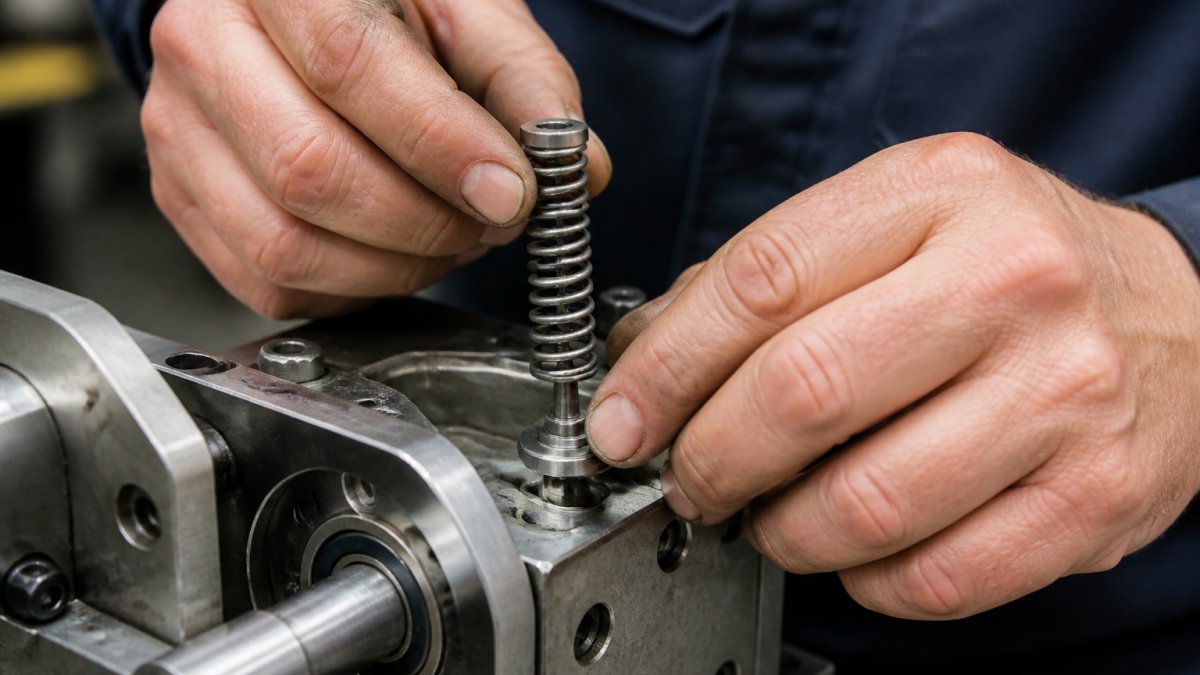
Step 4: Install Springs Correctly to Avoid Misalignment
Poor installation is a silent killer. A spring installed at an angle or off-centre experiences uneven stress distribution. The loaded side bears more stress than the unloaded side. That stress concentration initiates cracks.
Installation best practices:
- Check alignment: Use a straightedge or laser alignment tool to verify that the spring's axis is perpendicular to the mounting surfaces.
- Verify anchor points: Ensure spring hooks or mounting ends are seated firmly in their anchor points. Loose anchors allow movement and accelerate fatigue.
- Avoid preload: Unless the design specifies preload, install springs with zero initial compression. Preload adds baseline stress that reduces fatigue life.
- Test the fit: Before final installation, compress the spring by hand to ensure smooth, even deflection. Binding or resistance indicates misalignment.
- Secure the system: Tighten all fasteners and anchor points. Vibration from loose components causes fretting corrosion and loosens the spring over time.
Misalignment is often invisible. A spring that looks straight may be tilted a few degrees. That tilt concentrates stress on one side of the coil. Over thousands of cycles, a crack forms at the stress point.
Key Takeaway
The most common installation mistake is not checking alignment. Spend five minutes verifying perpendicularity. It prevents 80% of premature failures caused by misalignment.
Industrial Spring Maintenance and Inspection Checklist
Routine maintenance catches problems before they become failures. A simple inspection schedule extends spring life and prevents unexpected downtime.
Monthly inspection:
- Visual check for surface corrosion, discolouration, or pitting
- Listen for changes in spring noise during operation
- Verify that the spring deflects smoothly without binding
- Check that anchor points remain tight and secure
Quarterly maintenance:
- Clean the spring and surrounding area to remove dirt and moisture
- Reapply protective oil or grease if the environment is wet or corrosive
- Measure spring rate (load vs. deflection) to detect stiffness changes
- Inspect end squareness and coil geometry for signs of distortion
Annual overhaul:
- Calculate cumulative load cycles and compare against fatigue life estimates
- Replace springs that approach the end of their calculated service life
- Review operating conditions to identify any changes that increase stress
- Document all maintenance and replacement records
For critical applications, subsea, oil and gas, medical devices, maintenance schedules should be more frequent. Some applications require monthly or even weekly inspection.
Best For
Teams managing high-volume industrial machinery where spring failure causes production downtime. The cost of maintenance is trivial compared to the cost of unplanned shutdowns.
Common Mistakes That Lead to Premature Spring Failure
These mistakes appear repeatedly in the field. Avoid them and your springs will last.
Mistake 1: Ignoring fatigue limits Designers often assume a spring can handle peak loads indefinitely. In reality, cyclic loading accumulates damage.
Mistake 2: Selecting material based on price alone Cheap springs fail early.
Mistake 3: Over-tightening anchor points Excessive tension on spring hooks or mounting bolts introduces preload that reduces fatigue life.
Mistake 4: Neglecting corrosion in "dry" environments Humidity, salt spray, and industrial chemicals are everywhere.
Mistake 5: Installing springs without checking alignment Misalignment concentrates stress and halves service life.
Mistake 6: Waiting until failure to inspect Springs don't give much warning before they snap.
At SpringXpert, we recommend starting with our Metric Compression Springs Music Wire 0.2mm to 0.4mm Wire for general industrial applications.
The real value isn't in the spring itself, it's in preventing the failure.
Frequently Asked Questions
What are the typical causes of spring failure?
Spring failure stems from fatigue under cyclic loading, overloading beyond design limits, corrosion from environmental exposure, material defects, poor heat treatment, manufacturing inconsistencies, and misalignment during installation. Fatigue accumulates over millions of load cycles, weakening the wire. Corrosion initiates surface cracks that propagate under stress. Material selection mismatches and inadequate surface finish also accelerate failure. Identifying which cause applies to your application helps you prevent premature spring failure.
How can spring fatigue prevention reduce downtime in machinery?
Spring fatigue prevention extends service life by controlling stress concentration, managing load cycles within design limits, and maintaining consistent coil geometry. Reducing stress peaks through proper installation and load balancing slows crack initiation. Selecting materials rated for your cyclic duty and ensuring quality heat treatment improves fatigue resistance. Routine inspection catches early wear before catastrophic failure. These measures directly reduce unplanned maintenance stops and extend equipment availability.
What is the best approach to spring corrosion prevention in harsh environments?
Spring corrosion prevention combines material selection, surface finish, and environmental control. Stainless steel springs resist corrosion better than carbon steel in wet or chemical environments. Oiled finishes provide short-term protection; for long-term exposure, specify stainless grades or apply protective coatings. Minimise moisture accumulation, ensure proper drainage around spring mounting points, and schedule regular cleaning. In subsea or oil and gas applications, consult your supplier on specialist alloys such as Inconel or Phynox that withstand aggressive conditions.
How often should industrial spring maintenance inspections occur?
Inspection frequency depends on application severity and cyclic duty. High-cycle machinery typically requires quarterly or semi-annual checks; lower-stress applications may extend to annual inspections. Each inspection should verify spring rate consistency, check for visible cracks or surface corrosion, confirm anchor point security, and measure deflection under load. Document findings to track degradation trends. Springs showing more than 5-10% loss of load capacity or visible surface defects should be replaced before failure occurs.
Get started with SpringXpert and access our full range of over 20,000 standard compression, extension, and torsion springs, plus bespoke custom engineering. Our 12-hour response guarantee and ISO 9001 certification ensure every spring meets your exact specifications. Checkout our compression spring range and request a quote for your application today.