
Extension Springs
Extension springs, often referred to as tension springs, bear resemblance to compression springs but function under tension. They are equipped with hooks or loops designed to accommodate the application of force, as these springs typically connect to other components at both ends. When these components move apart, the inherent nature of the extension spring is to exert a force that endeavours to restore their proximity once again.
What are extension springs used for?
Whether operations need engineering or manufacturing springs, extension springs are a key component used in multiple applications. Close-coiled helical springs working in tension, they are engineered to resist pulling forces and ensure components return to their original position after a load is removed. As a result, tension springs are installed in industrial machinery, electronic devices, agricultural equipment, safety systems and a diverse array of assemblies that require a controlled return force.
Extensions can be manufactured in a wide variety of forms and are often found in products for household use; for example, in white goods, everyday electrical equipment and garage door assemblies.
To meet the demands of an application, exact specifications are required, including initial tension, end geometry, material grade and wire diameter to ensure optimal performance during operation.
Which extension spring material should I choose?
Tension springs ship in a range of different materials and with various finishes. This allows users to obtain extension springs that match their specific application and environmental conditions, but also their budget.
For instance, carbon steel is the most affordable material for manufacturing tensions springs. However, it has a lower working load that makes carbon steel springs best suited to light duties and non-critical applications.
A more robust option, stainless steel is offered in different grades to suit operating environments and conditions. For example, it supplies superior corrosion resistance when springs are fitted in equipment working outdoors or in damp areas, as well as in chemical-heavy environments. Type 316 stainless steel, for example, is renowned for offering additional resistance to corrosive forces found in saline and marine settings.
Springs may also feature finishes that enhance their appearance and functionality, ranging from plain and protective to decorative. Common choices include oil finishes and zinc plating. A protective zinc finish can improve a spring’s resistance to weather, water and humidity.
As a rule, always choose your tension spring material based on the following factors: operating environment, load requirements and cost.
At Springxpert, we stock a range of Extension springs from 0.1mm to 5mm wire in both carbon EN10270-1 steel and stainless steel EN10270-3 call us for a competitive quotation.
-

Metric Extension Springs 0.5mm to 1.00mm Music Wire
Original price £2.90 - Original price £5.00Original price£2.90 - £5.00£2.90 - £5.00Current price £2.90In stockMetric Extension Springs Extension springs, often referred to as tension springs, ideal for applications that need to store and release energy util...
View full details -
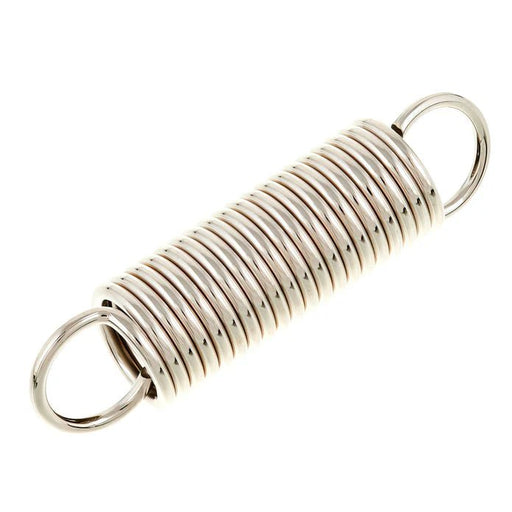
Extension Spring T41950
Original price £2.30 - Original price £2.30Original price£2.30£2.30 - £2.30Current price £2.30In stockExtension Spring T41950 302 Stainless Steel Extension Spring 1.4mm Wire 10mm Outside Diameter 26.90mm Free Length 5.11N/mm Rate Extension sprin...
View full details -

Extension Spring E0500-063-1750S
Original price £3.00 - Original price £3.00Original price£3.00£3.00 - £3.00Current price £3.00In stockExtension Spring E0500-063-1750S 302 Stainless Steel Extension Spring 1.6mm Wire 12.7mm Outside Diameter 44.5mm Free Length Extension springs a...
View full details

